
"Water Treatment"
20000 article(s) found

The evolution of coffee treatment: water washing, sun exposure and mixed treatment of coffee
Today, we are going to talk about the way coffee is handled. With the development of coffee today, the treatment of raw beans is mainly divided into water washing, sun exposure and the combination of the first two. Honey treatment belongs to the latter. To talk about honey treatment, we have to talk about boiling water washing and sun treatment from the coffee structure and the two oldest treatment methods. Coffee cherry structure from outside to inside: Pu
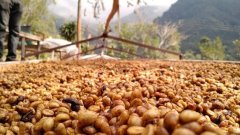
Innovative treatment of coffee beans difference of three processing methods of coffee beans: sun exposure, washing and honey treatment
Innovative treatment methods have become a trend in recent years, and many brand-new or deformed treatment methods continue to appear, bringing many different taste spectrum experiences. But also because of the emergence of these treatments. Simply cite the classification of several traditional treatments in previous years, such as solarization (Unwashed/Natural), honey (Honey Process) or peeling (Pulp Nat).
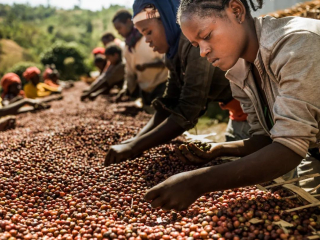
The most common 4 kinds of treatment methods: sun, water, semi-water, honey treatment of the difference?
Coffee beans are commonly processed in four ways, namely, solarization, washing, semi-washing, honey treatment. Solarization: The cheapest, simplest, and most traditional method of processing coffee beans for strong aroma requires drying the whole coffee cherry. There are also many differences in the implementation of this process, depending on the farm
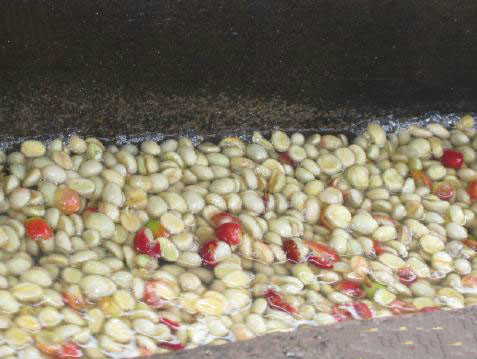
In addition to the sun, there is also a kind of coffee treatment called water washing, coffee culture and knowledge, semi-washing treatment.
What is the meaning of water washing treatment of coffee treatment the coffee beans after harvesting must enter the treatment procedure immediately, otherwise they will begin to ferment and produce a peculiar smell. There are two methods of treatment: solarization and water washing, which will cause different flavors. Sun-dried beans have a complete natural mellow taste.
What are the flavor and taste characteristics of honey-treated coffee beans? What kind of coffee is suitable for making coffee beans with honey?
Professional coffee knowledge exchange more coffee bean information please follow the coffee workshop (Wechat official account cafe_style) Coffee treatment Honey treatment HoneyProcess Honey treatment, English HoneyProcess or MielProcess, also known as semi-washing

The difference between sunburned and washed coffee beans is illustrated by the process of coffee solarization.
Coffee tanning process chart-the difference between sun-cured and washed coffee beans is very common in Brazil. The natural washing method is very similar to the water washing method, except that the natural washing method uses a high-pressure washing machine to remove the mucous membrane of the coffee surface, thus skipping the fermentation process. Several coffee and raw bean processing companies in Brazil and Colombia have patented this method and become

The washing method of coffee treatment explains the process of washing treatment.
Recently, there are always friends who have just come into contact with coffee to ask, what is the meaning of water washing and sun honey treatment on coffee bean bags? Water washing is not coffee like people bathing with water ah, sunbathing is not people sunbathing, honey treatment is not a fragrant bath ah! Haha, the picture is too beautiful to think about getting back to the point. Let me simply explain the washing of this half bucket of water today.
Introduction to Bass Coffee treatment-- characteristics of low-caffeine Coffee treatment in Switzerland
Professional coffee knowledge exchange more coffee bean information please follow the coffee workshop (Wechat official account cafe_style) caffeine removal methods caffeine removal technology originated in Germany, has a history of more than 100 years. Up to now, there are three main caffeine removal methods: Swiss water method, solution method and super carbon dioxide method. And either way, caffeine removal
Where does the coffee water treatment come from and why the semi-water treatment method appears?
Professional baristas please pay attention to the coffee workshop (Wechat official account cafe_style) water treatment method originated in Africa. Because the water washing method consumes too much water and causes serious pollution, the semi-washing method is produced, which means that the coffee fruit first removes the defective floating fruit through the flume, then removes part of the colloid layer, and then washes for an hour, due to the short immersion fermentation time, there is still pectin left on the bean shell.

Columbia supremo Swiss Water treatment process and principle of low-caffeine Coffee
Professional baristas please follow the coffee workshop (Wechat official account cafe_style) Swiss Water treatment (The Swiss Water or Water-Only Process): the use of commercially developed efficient treatment methods, there are two major steps. The first step is to pour the raw coffee beans into hot water, which will remove all the flavors from the raw coffee beans.

What are the methods of pulp treatment? Does pulp treatment include pulp treatment?
Professional coffee knowledge exchange more coffee bean information please pay attention to the coffee workshop (Wechat official account cafe_style) the four most common treatment methods of Brazilian coffee the basic skills of good quality coffee since the black tide [* Note], coffee beans sold in the market have also hit the slogan of fine products one by one, advocating a single producing area, micro-climate, various treatments and so on.

Coffee and soybean honey treatment | Coffee black honey red honey yellow honey treatment distinguishing characteristics of sun water and honey washing
For water-washed, sun-treated coffee beans, Qianjie has also popularized a lot of their characteristic differences, friends who do not understand can turn to here [portal]! As for honey-treated coffee beans, there have always been friends who wonder what it is like and what its flavor is. Today, Qianjie will come to tell you how to treat honey.

Arabica bean treatment method raw bean treatment semi-washing drying method Peruvian water washing treatment
The semi-washing method first removes the skin with water, and then goes to the sun. This is a relatively new and rare method. This method is only suitable for specific areas of some countries, with a long drying period. The coffee produced by this method is sticky, and the mucus is not removed as it is fermented in the tank. Therefore, the coffee produced by this semi-washing method contains water washing method.

What kind of coffee is low in caffeine? Recommend Colombian Swiss water treatment decaffeinated coffee beans
Professional baristas please follow the coffee workshop (Wechat official account cafe_style) Swiss Water treatment (The Swiss Water or Water-Only Process): the use of commercially developed efficient treatment methods, there are two major steps. The first step is to pour the raw coffee beans into hot water, which will remove all the flavors from the raw coffee beans.

What is the method of coffee bean enzyme treatment? What difference does coffee bean sunbathing water wash honey treatment have?
Professional coffee knowledge exchange more coffee bean information please follow the coffee workshop (Wechat official account cafe_style) individual coffee (more coffee activities) has become increasingly popular in recent years, while selecting coffee beans from manors around the world, we often see water washing, sun treatment, honey treatment and so on.
Why is the method of coffee processing becoming more and more complicated?
Recently, a friend of wine and coffee Shuangxiu complained to Qianjie: "there were only a few treatments when I studied coffee in the past, but I didn't pay attention to coffee information for only two years. Why are the current treatments so complicated? I really want to treat one bean at a time." The complication of coffee treatment also indicates that when dealing with coffee

Is Mexican decaf really caffeine-free? How is Swiss water treatment decaffeinated?
Mexico Chiapas Swiss Water treatment low-caffeine Coffee producing countries: Mexico Mexico producing areas: Chiapas Chiapas altitude: 9-1500 m varieties: bourbon, Kaddura, Ironka, Criollo treatment: Swiss Water treatment Grade: HG production season: 2020 Mexico has 12 major coffee producing areas, of which Chiapas is located in

The difference of taste and flavor between Colombian decaf coffee and general coffee characteristics of Swiss water decontamination treatment
Professional coffee knowledge exchange more coffee bean information please follow the coffee workshop (Wechat official account cafe_style) the basic knowledge and flavor description of Colombian coffee Colombia Swiss Water Process Colombia is located in northwestern South America, bordered by Venezuela and Brazil to the east, Ecuador and Peru to the south, Panama to the northwest, the Caribbean to the north and west to the west.

Yega Xuefei Garse Gexi Flower fragrant Red Honey treatment hand Chong suggestion _ how to deal with Yega Honey
Professional coffee knowledge exchange more coffee bean information please follow the coffee workshop (Wechat official account cafe_style) Yega Xuefei Coffee Gosh Red Honey treatment as a widely accepted Yejia Xuefei, this coffee bean is different in its treatment-red honey treatment. After such a special treatment, the richness and mellow thickness of this coffee bean, please climb to another tall building.

Coffee honey treatment video _ coffee bean honey treatment suitable for brewing coffee _ honey treatment coffee price
Professional coffee knowledge exchange more information about coffee beans Please follow the coffee workshop (Wechat official account cafe_style) Coffee treatment, which refers to the process by which coffee fruit turns into raw coffee beans (seeds). Generally speaking, there are three kinds of treatment, which are: sun washing, which is between sun washing and water washing, including semi-washing (wet planing) and peeling in Brazil.